
2026 impact report
How our work adds up to safety, belonging and a future young Tasmanians can believe in.
Somewhere in Tasmania tonight, a teenager is deciding whether to trust an adult again. Maybe they're accessing crisis accommodation after a blow-up at home that turned physical. Maybe they're a few weeks into weekly sessions with their mum and little brother, watching the yelling slowly turn into talking. Maybe they're sitting in a school group with other boys, working out for the first time what kind of man they want to be.
Multiplied across the State, moment by moment, relationship by relationship, this is what safety, belonging and a future to believe in looks like for young Tasmanians. This is the work behind the numbers in this report.
The belief that every young person is a hero in the making sits underneath everything we do across Tasmania, as well as our commitment to young people’s rights: to safety, to being heard, and to having a genuine say in decisions that affect their own lives.
This belief and commitment helped to define:
OUR KEY IMPACT AREAS
-
Youth homelessness in Tasmania is not easing.
Young people under 25 make up 39% of the state's homeless population, and more than 10% of Tasmanian 15- to 19-year-olds report experiencing homelessness in the past year.
Demand outstrips supply: in 2024–25, 61% of people turned away from Tasmanian homelessness services were under 25. *
Most young people looking for a safe place to stay arrive for the same reason: relationship and family breakdown, compounded by family violence and a lack of community support to fall back on.
Without a safe place to sleep, nothing else can really begin.
This year, we provided 96 young people with crisis and transitional accommodation that included on-site support; and helped a further 13 into a private rental through a dedicated subsidy scheme.
On-site support includes:
• Daily living skills - budgeting, cooking, and keeping a room
• Service navigation - getting to Centrelink, psychologist and school appointments
• Communal living - learning to live alongside other residents
• Family reconnection - rebuilding relationships that had frayed under pressure
57.3% of the young people who came to us for a place to stay had a prior mental health diagnosis on arrival.
Just over a third of young people accessing crisis accommodation through us (34.7%) identified as Aboriginal or Torres Strait Islander.
Satisfaction: 100% of residents who completed the transitional accommodation exit survey rated themselves satisfied or very satisfied overall, saying they felt welcomed, safe and listened to, and better equipped to deal with their issues after their stay.
The uncomfortable reality: Of the 49 young people supported in crisis accommodation only 16.7% fully achieved their case management goals while the rest moved on to another homelessness service; stopped requesting assistance; or lost contact altogether.
In contrast, 45.7% of young people in transitional accommodation achieved their case management goals.
Across both crisis and transitional accommodation programs 37.5% of young people were returning rather than new clients.
During 2025-26:
96 young people supported in crisis and transitional accommodation.
2,781 bed nights of safe housing provided.
13 young people helped into private rentals.
*Sources: ABS 2021 Census, via Shelter Tasmania's 2026 Tasmanian homelessness fact sheet; Mission Australia Youth Survey 2023, via ABC News, August 2024; Shelter Tasmania, 2026 fact sheet (2024–25 service data).
-
Nearly 39% of Australians aged 16 to 24 experienced a mental disorder in the past year, the highest rate of any age group, and in Tasmania that risk compounds with housing instability: 69% of Tasmanians experiencing persistent homelessness have a current mental health issue, well above the 50% national rate.
Ideas about violence and control formed young don't stay young. National research shows young people, particularly young men, still lag older Australians in rejecting them, and without somewhere to unlearn them, those ideas follow a person into adulthood.*
Improved wellbeing is a thread that runs through all our work, but it is a primary focus for two quite different programs.
The first engaged 61 grade 6 boys, in schools, to broaden their understanding of what healthy relationships look like and to challenge the stereotypes that might inform their thinking about anger, respect and gender-roles.
• Attitudes toward violence and control: Disagreement that “a man should know where his partner is at all times” rose from 44% to 75%. The largest shift of any measure, and disagreement that “men should use violence to get respect” rose from 86% to 100%, already the strongest starting point of any measure.
• Gender equality: Agreement that “men and women should be equal” rose from 77% to 96%.
• Self-regulation: Agreement with “knowing how to calm down when angry or upset” rose from 56% to 81%.
• Communication: Comfort talking about feelings among participants rose from 31% to 40%. This demonstrates real progress, but at well under 50%, it’s a reminder that this can be genuinely hard to learn.
The second program engages boys and young men who have experienced family, domestic or sexual violence in individual, strengths-based counselling. This work forms part of a National early intervention trial funded by the Commonwealth Department of Social Services.
• Reach: 65 young people have been engaged through 1,087 sessions this year.
• Self-regulation: Participants who completed a survey at the start and end of the program showed their ability to manage emotions, before reacting, rose from 2.4 to 4.4 out of 5.
• Family and everyday functioning: Participants reported that new skills have been attained and that their engagement in support programs has improved their overall situation.
• Satisfaction: Participants who completed an exit survey during the year provided a 4 out of 5 rating for feeling better able to deal with the issues they sought help for, and a perfect 5 out of 5 for both satisfaction with the service and feeling listened to and understood.
During 2025-26:
61 Grade 6 boys engaged in group work.
65 Boys and young men engaged in therapeutic counselling.
* Sources: Australian Bureau of Statistics, National Study of Mental Health and Wellbeing, 2020–22, via AIHW's 'Young people's mental health' (12–24 years); AIHW, Specialist Homelessness Services Annual Report 2024–25 (Tasmania, persistent homelessness clients); ANROWS, 2021 National Community Attitudes towards Violence against Women Survey (NCAS), findings for young Australians aged 16–24.
-
National research has found 1 in 5 young Australians report using violence against a family member, most often a sibling or their mother, and 9 in 10 of them experienced abuse themselves as children.
Violence sits at the acute end of a much wider problem: many more Tasmanian families are simply disconnected, unsure how to reconnect, or struggling to rebuild trust after conflict. Breaking these cycles means working with the whole family.*
This year, Home Base supported more than 725 people (young people and their family members) in programs that focus on behaviour change; family functioning and parenting confidence; and strengthening connections.
1. We worked with adolescents using violence in the home, alongside their parents and/or siblings, and delivering support to 258 people.
• Of those participants who completed pre and post assessment surveys, 50% were no longer using violence when they exited the program, and 57% had stopped using threatening behaviour.
• More than 80% of parents and carers who gave feedback said their relationship, communication and ability to resolve conflict at home had all genuinely improved.
2. We worked with groups of primary school aged children and their adult carers, giving them structured, creative time together while working on topics such as strengths, safety, communication and trust, delivering 161 sessions to 371 people.
• 36% of these families said they'd seen a genuine positive shift in their own knowledge, skills and confidence as a parent or carer.
• 32% reported a positive change in their family's day-to-day functioning.
3. We paired 91 young people at risk of homelessness with an outreach worker for general support that could be accessed at school, delivering 642 sessions this year.
• 88.7% of participants with a completed assessment, reported an overall improvement in their goals for independence, participation and wellbeing.
4. We worked with nine 12–18-year-olds (and their family members) at risk of youth justice involvement or school exclusion because of violent behaviour.
• These young people showed a self-reported increase in their ability to manage their own behaviour from 1.3 to 3.3 out of 5.
• Respondents rated their time with Home Base as a 4.7 out of 5 for feeling listened to and understood.
Why this matters: before these programs existed, many Tasmanian families had few options between doing nothing and calling the police. There is a growing waitlist for these programs, across the State, demonstrating a high level of unmet need
*Sources: Fitz-Gibbon, K. et al., 'Adolescent Family Violence in Australia: A National Study of Prevalence, Use of and Exposure to Violence, and Support Needs for Young People,' Monash University/ANROWS, 2022
-
A young person who stops turning up to school rarely does so for one simple reason, and in Tasmania, fewer are turning up than ever.
Just 31.6% of Years 7 to 10 students in Tasmanian government schools attended at least 90% of the time in 2024, down from 58.2% in 2019 (before COVID disrupted schooling altogether) and its disproportionately Tasmania's most vulnerable young people falling through the gap.
Every day that’s missed compounds the next: the further behind a young person falls, the harder it is for them to catch up.*
Increased engagement is about helping young Tasmanians to actively participate in the workforce and/or an educational system and two Home Base programs sit at the centre of this work.
In the first program, Engagement Coaches work one-on-one (for up to two years) with young people (aged 12 to 25) with a lived experience of homelessness to improve their engagement with education, work and/or training.
Staff provide regular coaching and case management; facilitate health and learning assessments; measure changes to and increase participant understanding of wellbeing; and facilitate access to transport and material basics.
• This year 25 young people were supported in the program.
• Of the 14 participants who weren't attending school at all when they started, 9 of them are now attending.
• 47.6% of eligible participants recorded at least a 50% increase in school attendance from baseline.
The Youth Career Facilitator service is designed to build stronger connections between local industry, employers and Year 9-12 students in Government schools to create improved vocational learning pathways.
This year, we engaged 276 young people in community activities and pilot initiatives delivered through schools, industry and training providers across Southern Tasmania.
These initiatives are focused on preparing students for employment in key industries, including (but not limited to) building and construction; tourism and hospitality; agriculture; health and community services; manufacturing; and early education and care services.
*Sources: DECYP Annual Report 2024–25 (Table 9, the 2024, 2023 and 2022 figures) page 40. Tasmanian Government Budget Paper No. 2, 2022–23, Department of Education chapter (the 2019–20 baseline figure).
-
Young people who've experienced family breakdown, educational disengagement, violence, mental ill-health or homelessness need real capacity for wellbeing and economic independence. Not just a crisis resolved, but a life built beyond it.
Safe transitional housing or a stable placement can look like success on paper, but the confidence and skills to live an independent life may not have been built yet.
Helping to close the gap between getting through and getting ahead, is part of what Home Base exists to achieve. Building empowerment and independence isn't the focus of one program area at Home Base.
Rather it's a thread that runs through almost everything Home Base does: empowering young people to name their own strengths; building the skills to live independently, and the self-worth to expect a healthy relationship or a stable job. In every program, this is what good, trusting relational work builds toward. We have committed to increasing youth led innovation and service design at Home Base with a view to achieving co-leadership with young people. Examples of co-design activities undertaken during the past year are outlined on our highlights page.
OUR 2025-26 FOOTPRINT
-
WE ARE 92
paid staff,
-
WORKING WITH 1,374
children, young people and family members,
-
ACROSS 138
locations around Tasmania,
delivering site-based and outreach programs;
in schools and in community settings;
working 1-on-1 and in groups;
TO ACHIEVE SAFETY, BELONGING AND A FUTURE YOUNG TASMANIANS CAN BELIEVE IN.

Take a minute to read about the inspiring people we are working with at home base.
Their stories of courage and hope keep us doing what we do, each and every day!
a message from our chair + ceo.
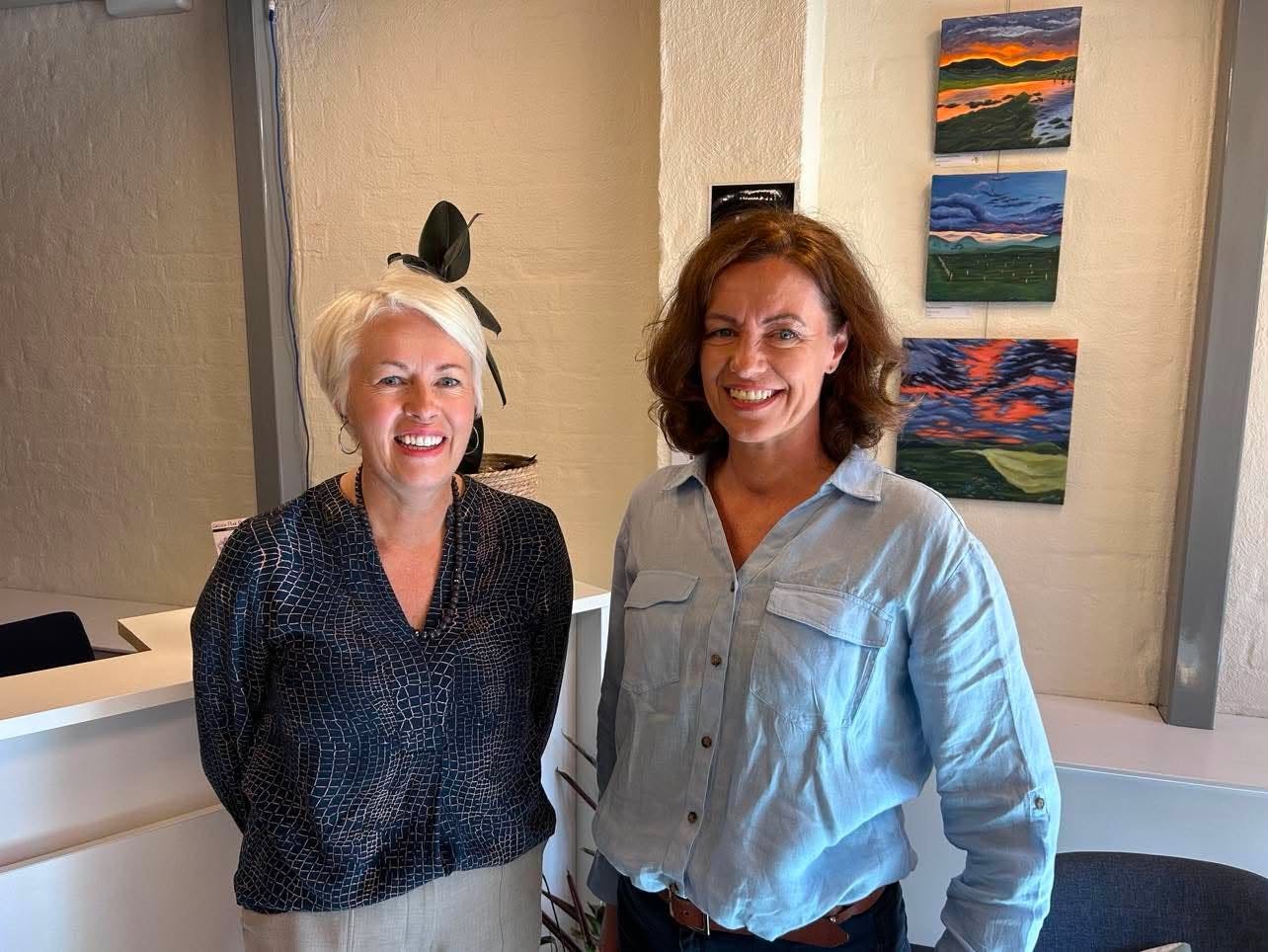
Like the art in the background? Head to @midnightmothmakery
-
That belief sits at the heart of Home Base.
Our purpose is to walk alongside young Tasmanians to create safety, belonging and a future they can believe in.
Our vision is of a Tasmania where every child and young person can live a good life.
More than 50 years ago, we began as a place where young people could connect, learn and grow. Today, we’re an independent, community-based organisation supporting thousands of young Tasmanians each year.
Along the way, we’ve supported more than 350,000 Tasmanians and provided early intervention support to more than 7,000 young people.
Increasingly, we understand that achieving our vision means we must end youth homelessness in this state, and look well beyond housing alone to get there.
Youth homelessness rarely begins with the absence of a house. Its foundations can be laid much earlier, in family breakdown, violence, poor mental health, disengagement from education, isolation and the absence of a trusted person or service at the moment it is needed.
That is why Home Base works across the continuum from prevention and early intervention through to crisis response, recovery and independence.
This year has given us even greater confidence that earlier help can change the trajectory of a young person’s life.
Behind the numbers are thousands of individual moments of change. A young person finding somewhere safe to sleep. A family learning to communicate without violence. A teenager returning to school after believing education was no longer for them. A young person learning to cook, budget, manage a tenancy or ask for help. Someone discovering that they have strengths, choices and a voice in what happens next.
This Impact Report deliberately tells those stories alongside our data. Because impact is not simply how many people come through our doors. It is what changes in their lives as a result.
There is much to be proud of, but an honest account of impact must also acknowledge where the system is not yet working well enough.
We believe Tasmania can do better.
And that is where our ambition for the next chapter of Home Base begins.
We want Tasmania to become a place where vulnerability is identified earlier, support arrives sooner and no young person is left behind because their circumstances are too complex or they do not fit neatly within a service system.
That means championing integrated early intervention, flexible educational pathways, holistic case management and unconditional care models. These four pillars will increasingly shape Home Base’s advocacy and influence.
Our ambition is not simply to grow Home Base. It is to use what we learn from young people, our practice and our evidence to help create better systems for young Tasmanians.
Importantly, we want young people themselves to have a greater role in this work. Their experience should not simply be something we consult about; increasingly, it should help shape the decisions we make and the systems we seek to change.
None of this work happens without people.
To our Home Base team, thank you for the care, persistence and belief you bring to this work every day. The relationships you build are at the heart of the impact described throughout this report.
To our government, philanthropic, corporate, research and community partners, donors and supporters, thank you for investing not only in Home Base, but in what is possible for young Tasmanians.
And most importantly, to the children, young people and families who allow us to walk alongside them: thank you for your trust.
Every young person is a hero in the making.
Our job, and our call to Tasmania, is to make sure the systems around them give them every opportunity to become one.
Sophie Davidson, Chair
Dianne Underwood, CEO
EUREKA BY HOME BASE
-
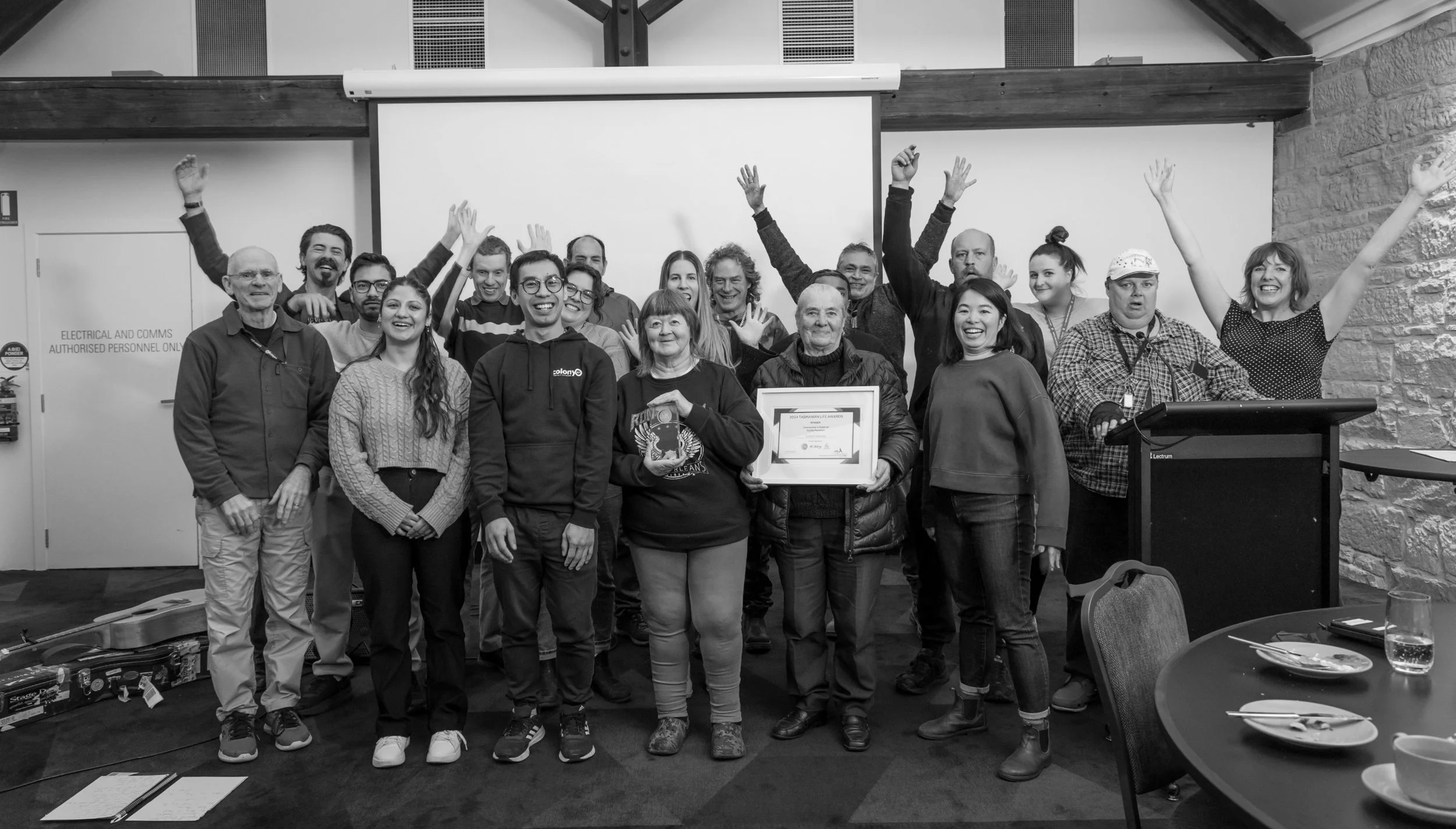
Eureka offers comprehensive mental health support programs to adults living with mental ill-health in Southern Tasmania. It is designed to help them find stability, connection and a genuine sense of purpose, whether through psychosocial recovery, intensive individualised support, or a stable home.
The Housing Accommodation and Support Initiative: (HASI) wraps intensive, individualised support around adults managing significant mental ill-health, helping them to build daily living skills, stay connected to the community, and move toward safer accommodation.
•33 participants were supported this year with 100% of them maintaining their tenancy and avoiding hospitalisation throughout the year. 10 participants were supported to transfer into more suitable, safer housing.
•Measured against the Recovery Star wellbeing tool, 100% of participants either maintained or improved their quality-of-life scores against the following domains: identity and self-esteem; relationships; physical health; home; use of time; friends and community; living skills; mental health; trust and hope and addictive behaviours.
•100% of participants who completed an exit feedback survey agreed they felt listened to and respected; more positive about their future; more confident managing their housing; ready and able to ask for help; and linked in with the services they needed. In addition, they rated their overall experience as ‘very satisfied’.
Clubhouse: The Clubhouse is a psychosocial recovery service within a site that adults living with mental ill-health choose to attend, to work, connect and belong. There were 60 active members this year with 72% of them participating in group activities.
•Members periodically complete the AQoL quality of life survey to assess changes, over time, across eight domains, including mental health; relationships; coping and independent living. 50% of survey respondents reported an improvement across the eight domains.
•33 members increased their work skills, completing 882 work orders across kitchen duties, cleaning, canteen operations, gardening, administration, phone duties and event planning.
•2 members moved into paid employment outside the Clubhouse altogether.
Tenancies: The Tenancies provide affordable, safe, and stable housing for people who may find it difficult to secure or maintain a tenancy, particularly in the private rental market, due to mental ill-health and the financial pressures associated with living on a low or limited income. 16 tenants were housed this year.
During 2025-26:
60 Active Clubhouse members.
33 people supported through mental ill-health.
16 tenancies sustained throughout the year.
Throughout the calendar year the Home Base team are out in the community.
We’re talking to young people, neighbours and government to create brighter futures, ideate together and make change.
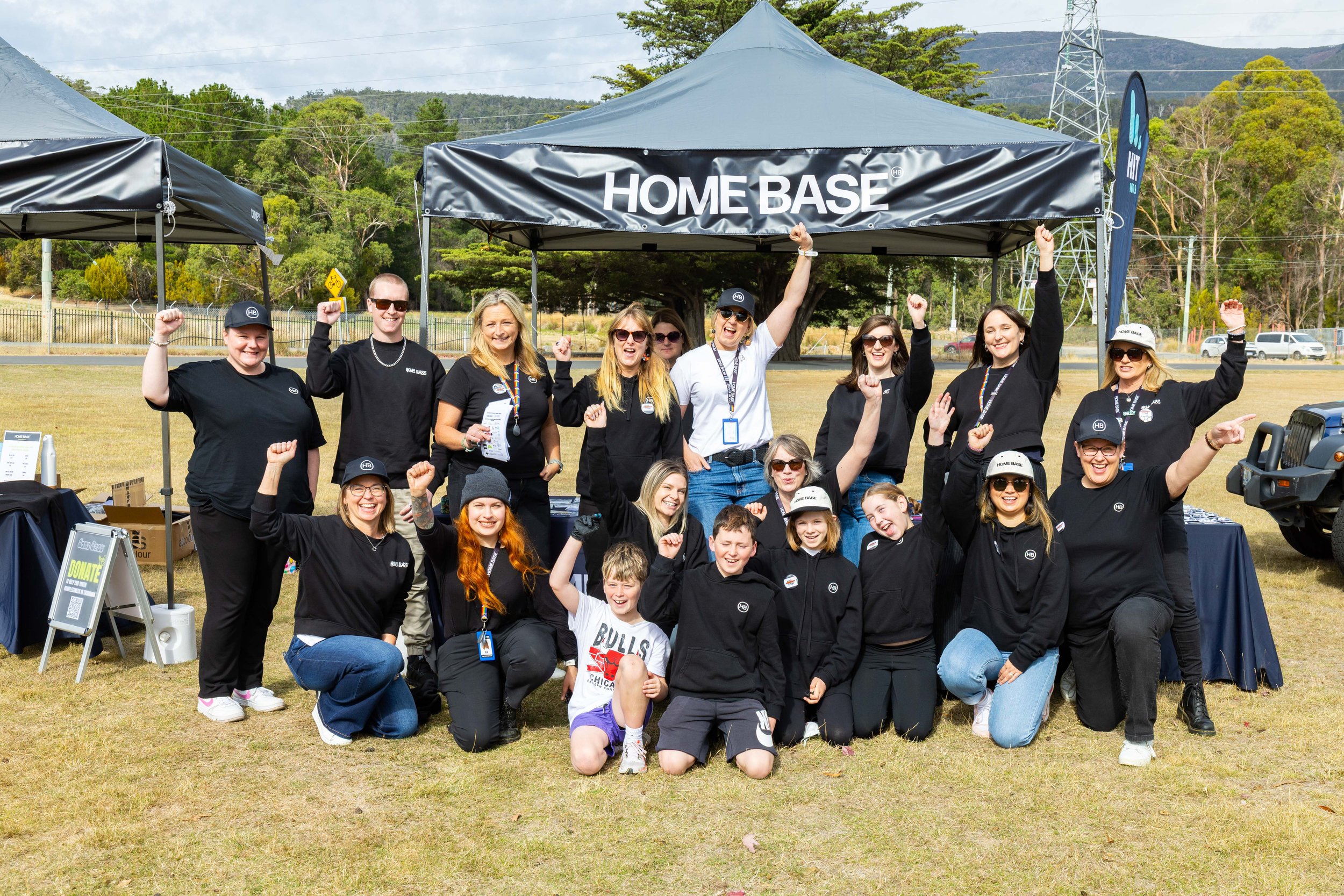
during the year, our team worked with young people and families to create better + brighter futures.
Here’s a handful of highlights through-out the year.
INTRODUCING OUR HOME BASE BOARD.
WE RECENTLY HAD OUR HOME BASE INTERVIEWER, FERGUS, SIT DOWN AND ASK THE BOARD ABOUT THEIR WORK WITH YOUNG TASMANIANS.
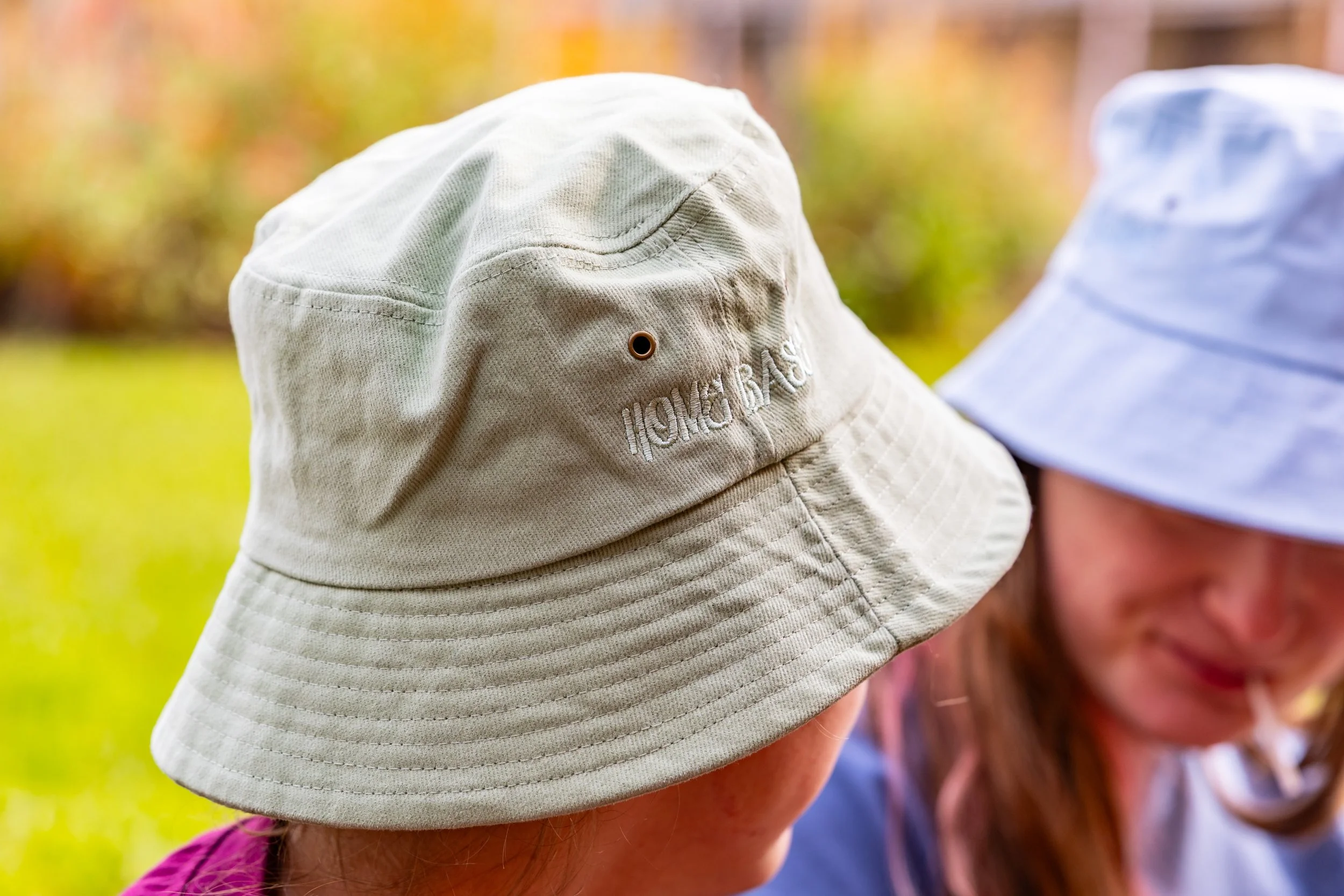
leave a legacy of hope
A gift in your Will is a lasting way to help create safety, belonging and futures for generations of young Tasmanians.
together it’s possible.
Every story in this report exists because people choose to stand alongside young Tasmanians.
thank you to everyone who stood beside us.
please visit our partnerships page to see our full list of supporters.
Want to know more about our impact?
For our full report containing more stories and impact, head over to our reports page and view our stats for previous years, including case studies and more information on how we’ve been making a difference in the Tasmanian community.

GET THE NEWS FIRST
Join the mailing list and get all the news straight to your inbox!